




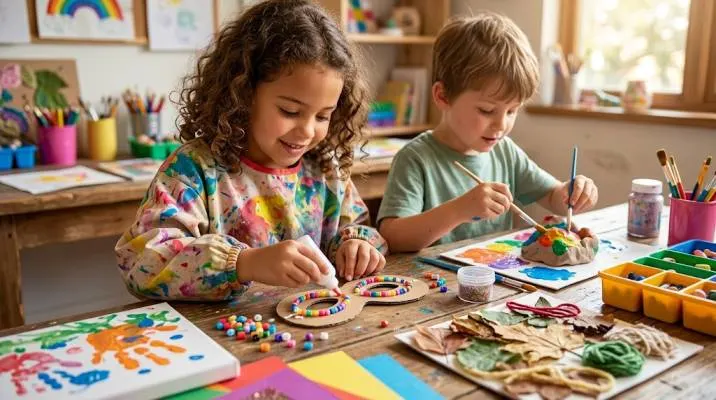
Art projects for kids do more than fill a rainy afternoon. They build finger strength, spark problem-solving, and give children a sense of pride. I've run craft sessions with neighbourhood kids for four years now. The mess is real. So is the magic.
Some projects flop within five minutes. Others keep children engaged for an hour or more. The difference comes down to preparation, age-appropriate materials, and letting kids make their own choices.
This guide shares what works, what wastes money, and how to set up art time without losing your sanity.
Why Art Time Matters More Than You Think?
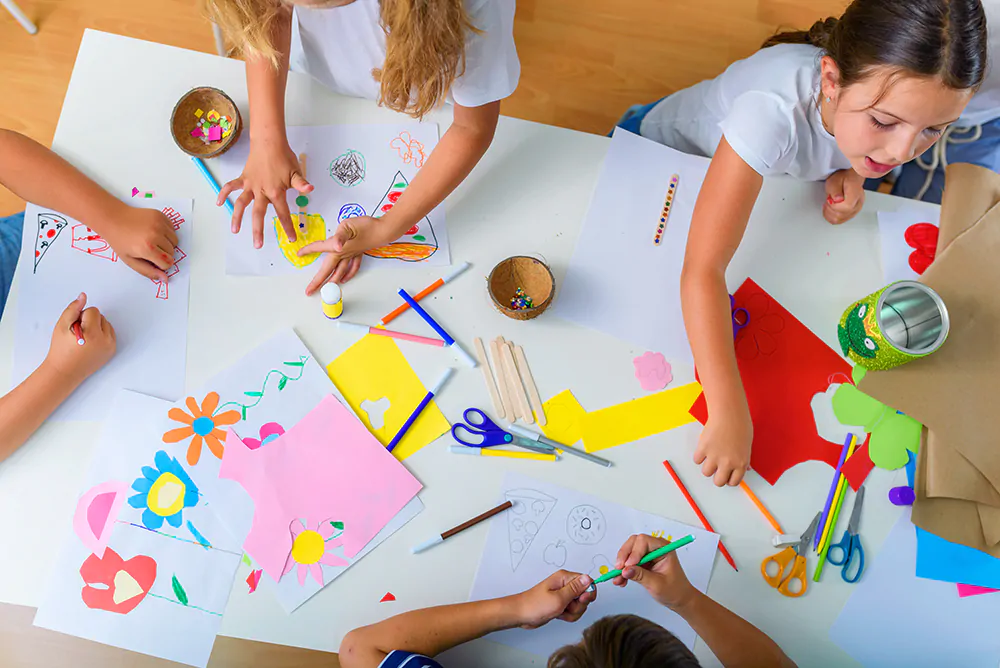
Children learn through their hands. Cutting paper strengthens the same muscles needed for pencil grip. Painting builds hand-eye coordination. Sculpting teaches spatial awareness.
Read Also: Naive Design Layout Inspiration: Simple Ideas And Tips
Research backs this up. Fine motor skills developed through art predict later academic success. Kids who struggle with scissors often struggle with handwriting too.
But there's another benefit. Art gives children control. They decide colours. They choose shapes. They make mistakes and fix them. That independence builds confidence in ways structured activities don't.
Setting Up Without Losing Your Mind
The biggest barrier to art time is cleanup fear. I get it. Paint on walls. Glitter on floors. Glue in hair. Preparation solves most problems.
Cover the table. Old newspaper works. So does a plastic tablecloth from the dollar store. Five seconds to set up. Saves twenty minutes of scrubbing.
Use trays. Baking sheets or plastic plates contain supplies. Each child gets one. Spills stay localised.
Aprons or old shirts. Button-up shirts worn backwards work perfectly. The collar protects the neck. The sleeves roll up.
Wet wipes nearby. Always. For hands, faces, and emergency table cleanups.
A designated art bin. Keep supplies in one container. No hunting through drawers when inspiration strikes.
Art Projects by Age Group
Children develop at different rates. But general guidelines help.
Ages 3-5: Process Over Product
Toddlers and preschoolers don't care about finished results. They care about the doing.
You Must Also Like: Success Growth: Why Personal Growth Drives Business Success?
Finger painting: Mix flour, water, and food colouring. Safe if eaten. Squishy. Perfect for sensory exploration.
Torn paper collages: Tearing builds finger strength. Gluing teaches patience. The finished piece looks abstract and beautiful.
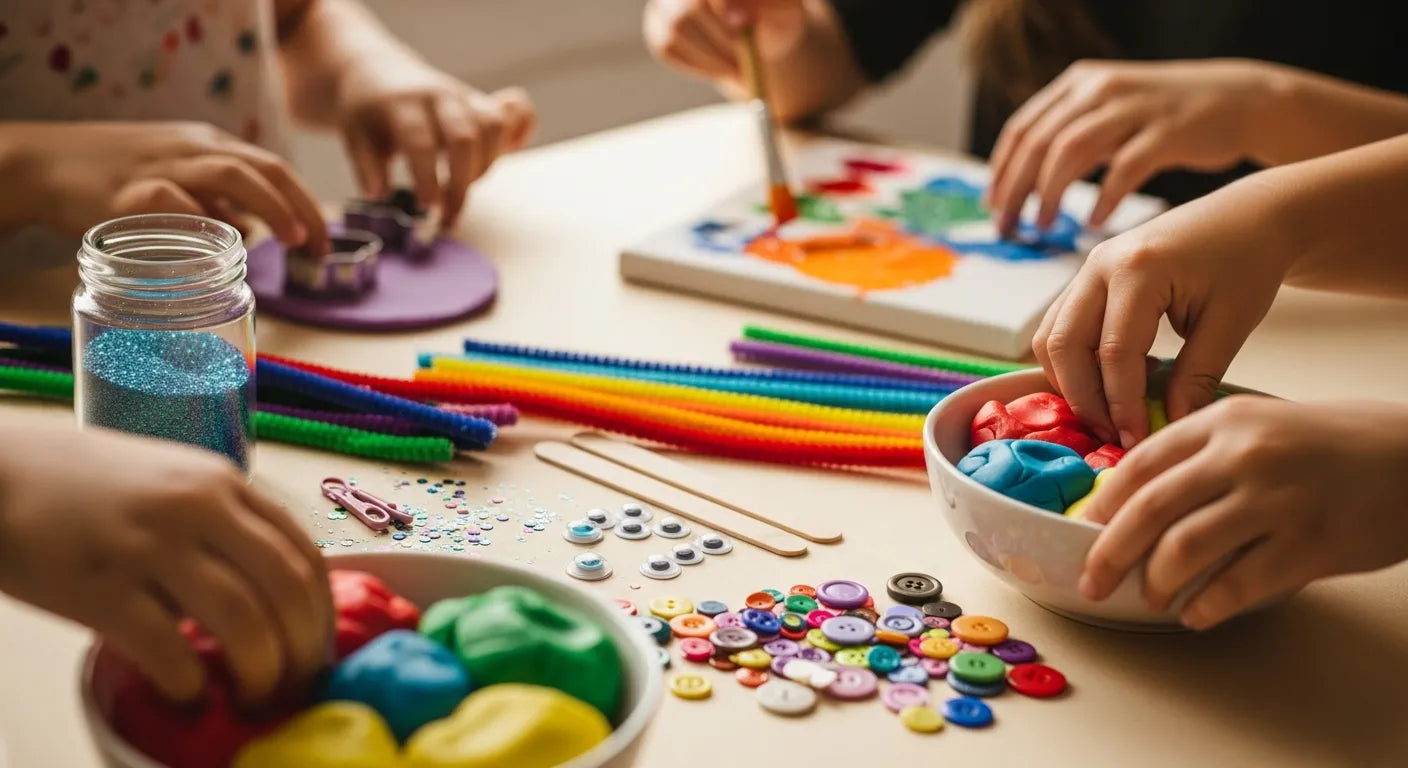
Playdough sculptures: Homemade playdough costs pennies. Add rolling pins and cookie cutters. Let them create whatever appears.
Chalk drawing: Sidewalk chalk outdoors. No cleanup. No rules.
Avoid scissors at this age. Or use safety scissors with close supervision. Most 3-year-olds lack the coordination. Frustration follows.
Ages 6-8: Building Skills
This age group can follow simple instructions. They take pride in finished work.
Paper weaving: Cut strips of coloured paper. Weave them into a mat. Teaches patterns and patience.
Watercolour resist: Draw with white crayon. Paint over with watercolours. The drawing appears like magic.
Cardboard sculptures: Save delivery boxes. Provide tape and scissors. Watch them build castles, robots, and spaceships.
Bead threading: Pony beads and elastic cord. Creates jewellery. Builds fine motor control.
Ages 9-12: Independence and Challenge
Older kids want projects that look impressive. They can handle multi-step instructions.
Recycled art projects for kids: Turn plastic bottles into planters. Transform old magazines into collages. Build robots from bottle caps and cardboard.
Printmaking: Carve simple designs into styrofoam trays. Roll with paint. Press onto paper.
Sewing basics: Felt squares, plastic needles, embroidery floss. Start with simple stitches. Progress to small pouches.
Stop-motion animation: Use a phone and simple props. Clay figures. Lego characters. This combines art with technology.
Elementary Art Projects That Actually Work
I've tested these with groups of ten or more children. They hold attention. They use affordable supplies.
Salt Dough Ornaments
Mix one cup flour, half cup salt, half cup water. Knead until smooth. Roll out. Cut shapes with cookie cutters. Bake at 200°F for two hours. Paint when cool.
Total cost: Under ₹100 for a batch of twenty.
Why it works: Kids love the dough texture. The baking creates anticipation. The painting gives a second activity.
Nature Collages
Take a walk. Collect leaves, twigs, flowers, and pebbles. Bring them home. Glue onto cardboard.
Total cost: Free.
Why it works: Combines outdoor time with indoor creativity. Every collage looks different.
Handprint Art
Paint a palm. Press onto paper. Turn the print into animals, flowers, or trees. Add details with markers.
Total cost: Paint and paper only.
Why it works: Creates keepsakes parents actually want. Grandparents love these.
Paper Plate Animals
Fold, cut, and paint paper plates. Add googly eyes. Create lions, owls, fish, and bears.
Total cost: Under ₹200 for supplies.
Why it works: Simple enough for young kids. Customisable for older ones.
Recycled Art Projects That Teach Sustainability
Art supplies cost money. Recycled materials cost nothing. They also teach children about waste.
Cardboard castles: Delivery boxes become towers, walls, and drawbridges. Tape holds everything together.
Bottle cap mosaics: Collect caps for weeks. Arrange into pictures. Glue onto cardboard.
Newspaper baskets: Weave strips of newspaper into useful containers. Messy but rewarding.
Tin can lanterns: Remove labels. Fill with water. Freeze. Punch holes with a nail. Add a candle.
These projects send a message. Not everything new comes from a store.
Materials Worth Buying
You don't need fancy supplies. Basics work best.
Washable markers: Non-toxic. Easy to clean. Crayola and similar brands last longer than generics.
Tempera paint: Cheap. Bright. Washes off skin and most fabrics. Buy the liquid version, not cakes.
Glue sticks: Less messy than liquid glue. Better for paper projects. Liquid glue works for heavier materials.
Safety scissors: Blunt tips. Sharp enough to cut paper. Left-handed versions exist.
Construction paper: Thicker than printer paper. Holds paint and glue without curling.
Crayons: Basic set works fine. Specialty crayons (metallic, neon) add variety but cost more.
Skip: glitter (gets everywhere), permanent markers (stain everything), expensive art kits (children lose interest fast).
Safety Considerations
Art time should never send anyone to the hospital.
Choking hazards: Beads, buttons, and small caps are dangerous for children under three. Supervise closely or avoid entirely.
Non-toxic only: Check labels. "Non-toxic" means safe if ingested in small amounts. Still discourage eating supplies.
Ventilation: Some markers and paints produce fumes. Work in open areas.
Scissors: Even safety scissors cut. Demonstrate proper use. Store out of reach when not in use.
Allergies: Check for nut oils in playdough. Latex in some paints. Ask parents about sensitivities.
How to Encourage Without Taking Over?
The hardest part of art with kids is stepping back.
Don't fix their work. That tree looks nothing like a tree? It's their tree. Leave it.
Don't correct colour choices. Purple grass exists in their world. Let it.
Don't rush. Children need time to explore materials. The process matters more than finishing.
Do ask questions. "Tell me about your picture." "What happens next?" These prompt reflection without criticism.
Do display their work. The fridge works. So does a string line across a wall. Pride grows when creations are valued.
Final Thoughts
Art projects for kids build skills that last a lifetime. Finger strength. Problem-solving. Creative confidence. The mess is temporary. The benefits stick.
Start with simple supplies. Cover the table. Set clear boundaries. Then let children explore.
Elementary art projects don't need expensive kits or elaborate setups. Flour, salt, and water make playdough. Boxes become castles. Leaves become art.
Recycled art projects for kids teach sustainability while saving money. The best materials often come free.
Set aside time each week. Even thirty minutes helps. Watch your children grow more capable, more creative, and more confident with every session. The pride on their faces when they finish something themselves? That's worth every drop of paint on the floor.