




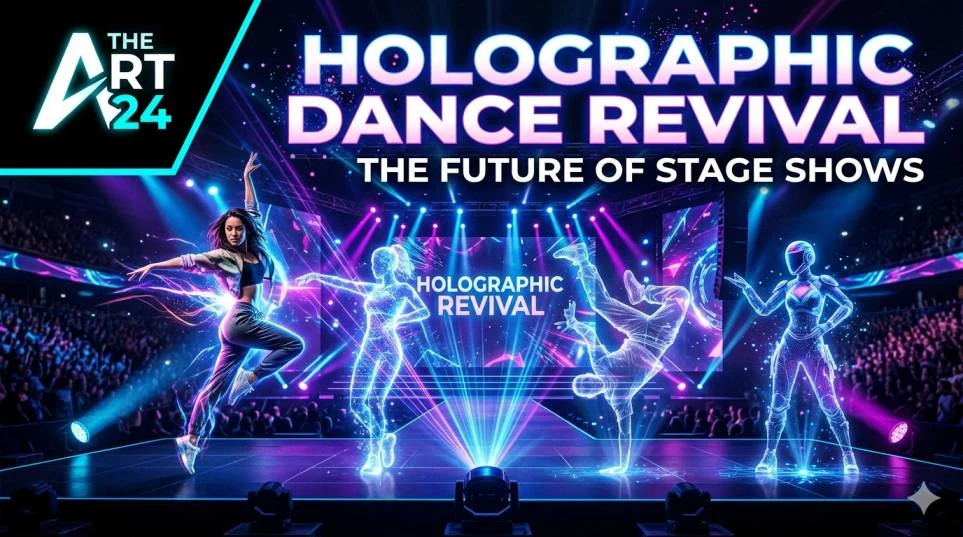
I watched a dancer turn into a paintbrush last month. Not metaphorically. Actually. Her body traced glowing lines across a dark stage. No physical paint. Just light. Just movement. Just something that looked like magic but turned out to be holographic dance. I sat there for ten minutes trying to figure out how they did it.
The holographic dance performance I saw was part of a small experimental showcase in Mumbai. Nothing fancy. Just three dancers, some projectors, and a lot of courage. But it changed how I think about stage shows.
Traditional dance is beautiful. But holographic dance? That is a whole new language. This article breaks down what works, what costs, and what you absolutely should not do if you want to try this yourself.
What Exactly Is Holographic Dance Revival?
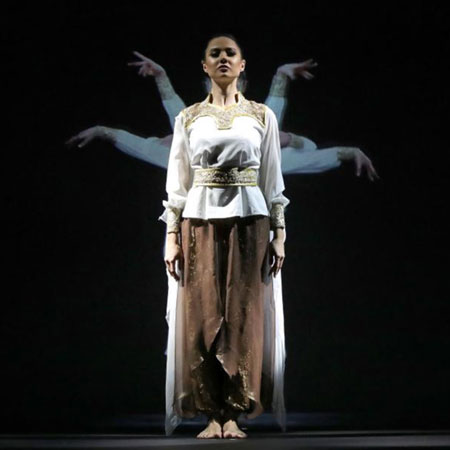
Let me clear up the disarray to begin with. The holographic move restoration implies bringing back audience consideration to move utilizing light projections, 3D imaging, and movement following. It is not new technology. But the way individuals utilize it presently is totally different.
Related Article: Dancing in the Ballroom: Steps, Styles & Tips
Dancers became human brushes. The ink followed their hands. Their feet painted the floor. By 2026, this show is touring globally. Jacob's Pillow Dance Festival in Massachusetts will host it in August 2026.
This is not a screen behind the dancers. This is light interacting with bodies in real time. That is the revival part. Dance stopped feeling new to young audiences. Holograms make it feel fresh again.
The Three Types of Holographic Dance You Will Actually See
After watching multiple shows and talking to production teams, I found three distinct types of holographic dance music integration. Each works for different budgets and venues.
Type 1: Projection Mapping on Bodies
Dancers wear white or reflective costumes. Projectors map images directly onto their moving bodies. The holographic dance costume becomes the screen. This looks incredible up close. But it fails in large stadiums. The projections get washed out by stage lights.
Type 2: Pepper's Ghost Illusion
This is the old trick from Disney's Haunted Mansion. A semi-transparent mirror reflects a hidden screen. The hologram appears to stand next to real dancers.
It works for ghostly effects and "duet with dead legend" moments. Michael Jackson's 2014 Billboard performance used this. But the dancer cannot interact with the hologram. There is no real feedback.
Type 3: Motion Capture + Real-Time Rendering
This is the expensive one. Dancers wear motion capture suits. Computers track every joint movement. That data drives holographic visuals that respond instantly.
Birmingham Royal Ballet used this with a company called Holosphere. Their dancers controlled a 35-meter-long immersive backdrop just by moving. The holograms reacted like a dance partner who actually listens.
How NYUAD Pushed the Boundaries?
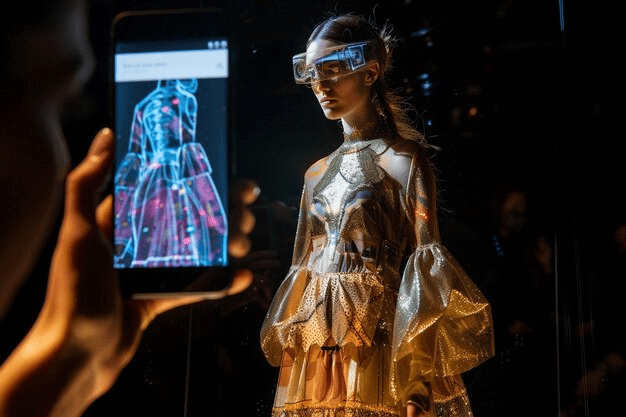
In February 2026, NYU Abu Dhabi presented "Ink - Huang Yi Studio +". I read the reviews carefully. What struck me was the collaboration. Huang Yi (choreographer and inventor) worked with Ryoichi Kurokawa (audiovisual pioneer).
They did not just project lights. They turned dancers into calligraphy brushes that painted and left marks on stage through mesmerizing movement.
You Must Also Like: Different Types of Dance and What Makes Each Unique?
The show combined explosive and precise dance language with meticulous digital artistry. The result transcended borders and fused analog and digital. That is the phrase that matters. "Fused analog and digital." Not replaced. Fused.
Every successful holographic dance performance I have seen follows this rule. The hologram serves the dancer. Not the other way around.
Honest Pros and Cons of Holographic Dance Production
Let me give you the real talk. No promotional hype.
The Pros
Audience engagement jumps through the roof. A 2024 scholastic ponder distributed in "Studia Semiotyczne" found that cyborgs, robots, avatars, and 3d images in performing expressions drive onlookers to address their relationship with moving developments. That questioning keeps people watching. They stop scrolling their phones.
You can archive performances forever. Birmingham Royal Ballet worked with This Great Adventure to capture 3D holograms of real dancers using reality capture technology. Their vision is simple: "Anyone. Anywhere. Anytime." A dancer performs once. That hologram performs a thousand times.
Creative possibilities explode. The Intelligent Holograms project in the UK is researching how a ballerina's movements can train an AI hologram that performs back-and-forth with her. Imagine a dancer teaching a holographic version of herself. Then the two dance together. That is not sci-fi. That is a funded research project in 2026.
The Cons
The uncanny valley is real. The same academic paper warns that advances in technology deepen the "uncanny valley" phenomenon. When holograms look almost human but not quite, audiences feel uneasy. Some shows deliberately exploit this discomfort. But most do not want their audience creeped out.
Costs can spiral. A custom holographic dance costume with embedded LEDs and reflective materials starts at around $260 for basic carnival-style pieces on Alibaba. But professional motion capture suits and real-time rendering systems?
Those run into tens of thousands of dollars. Birmingham Royal Ballet's 35-meter backdrop system used technology normally reserved for Disney's The Mandalorian TV set. That is not cheap.
Technical failures kill the magic. If the projector glitches or the motion tracking lags, the illusion shatters. Unlike a traditional dance show where a missed step goes unnoticed, a holographic glitch is impossible to ignore.
How Much Do Custom Dance Costumes Actually Cost?
This is the question every dance troupe leader asks me. "How much do custom dance costumes cost for holographic performances?"
Here is the honest breakdown based on actual 2026 pricing.
Entry Level (₹20,000 - ₹50,000 or 240−240−600)
Basic reflective fabrics. Hand-applied sequins. Glitter tulle overlays. These catch standard stage lights but do not interact with projection mapping. You can buy custom carnival-style feather headdresses with red rhinestones for about $580 per piece on Alibaba. That gets you flashy. Not functional.
Mid Range (₹80,000 - ₹2,00,000 or 960−960−2,400)
Costumes with embedded LED strips. Small battery packs. Reflective beads that work with basic projection mapping. The Y2K prom revival trend in 2026 is driving demand for iridescent sequin gowns and rhinestone mesh fabrics. These look holographic under blacklight. But they do not actually project moving images.
Professional Grade (₹5,00,000+ or $6,000+)
Full motion capture suits. Wireless data transmitters. Custom-programmed LED panels. This is what ballet companies use. Most small troupes rent these. Buying is almost impossible for independent artists.
My practical advice: Start with reflective fabrics and good lighting design. Do not buy expensive tech until you have tested your concept with cheap materials. I have seen too many groups blow their budget on LEDs and forget to choreograph the actual dance.
Practical Buying Guidance for Small Dance Troupes
You have a group of dancers. You want to try holographic dance music integration. You have a small budget. Here is what I learned after watching five amateur productions succeed or fail.
Step One: Rent, Do Not Buy
Rent a projection mapping projector for one weekend. Cost is roughly ₹15,000-₹25,000 per day in major Indian cities. Test if your dancers can hit their marks while lights move around them. Most cannot. Better to fail with rented gear than owned gear.
Step Two: Hire a Technician Who Dances
I cannot stress this enough. The worst productions I saw had a technician who never danced and dancers who never touched tech. You need a person who understands both. The Intelligent Holograms project at Coventry University is literally funding research into this intersection. That is how important it is.
Step Three: Start with Static Holograms
Do not attempt real-time motion tracking on your first show. Use pre-recorded holographic elements that play at specific times. Birmingham Royal Ballet's OPUS app started with simple captured excerpts before moving to complex interactions. Walk before you run.
Who Is This For? (And Who Should Wait)
Best for: Contemporary dance companies with existing tech budgets. Venues with good projector infrastructure (black box theaters work better than proscenium stages). Choreographers who understand both movement and visual design.
Not best for: Traditional ballet troupes performing classics. The technology distracts from pure technique. Ballets like Swan Lake do not need holograms. They need clean fifth positions and honest emotion.
Wait for: Small independent groups with less than ₹5 lakh total budget. The technology costs are dropping every year. But they are not cheap enough yet for grassroots experimentation. Wait for 2028. Prices will halve.
Where Holographic Dance Is Headed by 2028?
I follow three trends closely.
Interactive Audience Participation
The Immersive Arts UK project is researching how observers can actively shape their environments through responsive holographic technology. Imagine the audience clapping changing the color of a hologram. Or phone flashlights triggering new visual layers. That is coming.
AI-Generated Holographic Partners
The same project is investigating "performative interaction between the physicality of the human body and the virtual physicality of an intelligent holographic construct trained on that same body".
A dancer trains an AI on their movement style. The AI generates a holographic partner that improvises with them. No two shows the same.
Lower Costs, Wider Access
Motion capture technology used on Disney sets is already trickling down to regional theaters. The gap between Bollywood budgets and college festival budgets will narrow. By 2028, a good holographic dance costume will cost what a good sequin costume costs today.
The Final Thoughts
Yes. But start small.
The holographic dance revival is real. Academic institutions are publishing papers on it. Major ballet companies are investing in it. International festivals are booking it. This is not a passing trend.
But the shows that work are the ones where the technology serves the dance. Not the other way around. Huang Yi did not replace his dancers with robots. He made the robots dance with him. The calligraphy followed the human body. The light served the movement.
If you remember nothing else, remember this. A hologram without a soul is just a fancy screensaver. A dancer with a hologram is a storyteller with new colors on their palette. Choose which one you want to be.