





I sat in the Theatre Royal Haymarket last week. The lights dimmed. A man walked on stage.
He did not say a word for ten seconds. He just stood there. Stooped shoulders. A slight drag in his step. His eyes scanned the empty stage like a general surveying a battlefield.
That was Ralph Fiennes becoming Henry Irving. The audience stopped breathing. I know I did. Let me tell you about Ralph Fiennes Grace Pervades and why this production is the must-see theatre event of 2026. No spoilers. Just honest observations from someone who was there.
What Is Grace Pervades About? The Short Version
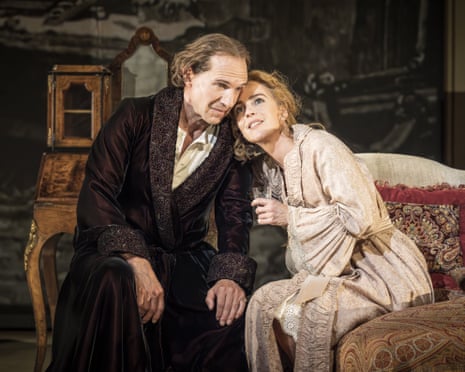
You are probably asking what is Grace Pervades about. Fair question. The title sounds like a perfume ad. It is not. David Hare wrote this play about two real people. Henry Irving and Ellen Terry.
Read Also: Whos Playing at Saratoga Performing Arts Center Tonight?
Terry was his leading lady. She was warm, intuitive, and wildly popular. The public loved her. Irving needed her. The play follows their partnership. Their arguments. Their unspoken feelings. And the legacy they left behind.
The title comes from a real Victorian newspaper critic. He called Terry a woman "through whom grace pervades". That was his polite way of saying she had an illegitimate child. Scandalous stuff for 1870s London.
Ralph Fiennes: Why He Is Mesmerising
I have seen Fiennes on screen many times. Schindler's List. The English Patient. The Grand Budapest Hotel. Conclave last year.
None of that prepares you for him live on stage.
He plays Irving as a man carved from granite. Stiff posture. Deliberate movements. A voice that carries to the back of the theatre without ever seeming loud.
Here is what struck me. Irving was supposedly not a great physical actor. Critics of his day said his body let him down. His mind was brilliant. His movements were awkward.
Fiennes leans into this. He does not try to make Irving graceful. He makes him real. The stoop. The dragging leg. The way he holds his hands like he is not sure what to do with them.
And then he opens his mouth.
The man can deliver a line. Dry wit. Raw pain. Quiet fury. It all comes through in perfectly precise diction.
One reviewer called him "focused, luminous, magnetic" . Another said "utterly compelling". I say both are right.
Miranda Raison as Ellen Terry: The Perfect Counterpoint
You cannot have Irving without Terry. The play makes that clear.
Miranda Raison plays Ellen Terry. You might know her from Spooks or as Anne Boleyn. On this stage, she is something else entirely .
Where Fiennes is still and controlled, Raison is warm and alive. She moves across the stage like she owns it. Her Terry laughs easily. She charms everyone. She also fights back.
There is a scene early in the play. Irving lectures Terry about how to say her lines. Look at the other actors, he says. Not the audience.
She waits a beat. Then delivers a response that got the biggest laugh of the night. I will not spoil it. But the whole audience erupted. You believe there might be something more between them. The play never confirms it. It does not need to.
The Children: Edith and Edward Craig
The play does something unexpected. It spends significant time on Terry's children.

Ellen Terry had two children out of wedlock. Edith and Edward Gordon Craig. In Victorian England, this was a massive scandal. The "grace pervades" comment was aimed directly at her.
Full of theories about theatre that sound impressive but never quite work. He spent three years in Moscow working on a Hamlet production that never opened. His character jokes that maybe the best theatre has no actors and no text.
Some critics felt the children take too much time away from Irving and Terry. I understand that complaint. Every time the play cut away from Fiennes and Raison, I felt a small disappointment.
But I also see why Hare included them. The play is not just a love story. It is about how theatre changes across generations. The Victorians had their way. The next generation had theirs. We have ours.
The Visuals: Bob Crowley's Design
Theatre critics often ignore the design. I will not.
Bob Crowley designed the sets. Fotini Dimou did the costumes. Together, they create something stunning.
You Must Also Like: When Are the Final Episodes of Stranger Things Coming Out?
The play moves through twenty-five scenes. Decades pass. Locations shift from London to Moscow to Kent. The set transforms seamlessly. Gaslit Victorian stages give way to modernist experiments.
And the costumes. My God, the costumes. When Raison appears as Portia, Lady Macbeth, and Viola in quick succession, each outfit is more beautiful than the last. You understand why Victorian audiences adored Terry. She was a spectacle.
The Writing: David Hare at His Best
David Hare is one of Britain's greatest living playwrights. He wrote The Hours. Skylight. Straight Line Crazy.
Grace Pervades might be his warmest play.
There is a lot of humour here. Irving and Terry bicker like an old married couple. The supporting characters include a wonderfully pretentious Isadora Duncan. The one-liners land consistently.
But there is also real emotion. A scene where Terry begs to play Rosalind in As You Like It. Irving dismisses the play as "ridiculous." The disappointment on her face. The way she swallows it and moves on. That stayed with me.
Hare is asking big questions. What is theatre for? Why do we watch actors pretend to be other people? How much of yourself do you sacrifice for your art?
He does not answer them. He just lets Irving and Terry live inside the questions.
The Critics Agree: This Is Special
I am not the only one impressed.
The Guardian called Raison "exceptional". The Observer said Fiennes "triumphs". The Times used the word "mesmerising". The Financial Times described the play as "fascinating, absorbing and very funny.
A BroadwayWorld review praised Fiennes as "totally mesmerising" and noted his "masterful delivery of Hare's dry wit".
The only consistent criticism? The play spends too much time on the children. Some reviewers wanted more Irving and Terry. I get that. But it is a small complaint about a large achievement.
Should You See It? Honest Advice
Here is my honest take.
See this play if:
-
You love Ralph Fiennes and want to see him at his best
-
You are interested in theatre history and how it shaped modern performance
-
You enjoy sharp, witty dialogue about art and ambition
-
You appreciate stunning design and costumes
Skip this play if:
-
You cannot sit through a two-and-a-half-hour play (with one interval)
-
You want a simple love story with clear answers
-
You dislike plays that jump between time periods and locations
-
You are under 12 (the production recommends 12+ due to thematic content)
Practical Details for 2026
The West End transfer runs from 24 April to 11 July 2026 at the Theatre Royal Haymarket in London. Tickets are selling fast. The Bath run sold out completely. London will likely do the same. Book early if you want to go.
The full cast includes Ruby Ashbourne Serkis, Jordan Metcalfe, Youness Bouzinab, Giulia Innocenti, Tom Kanji, and Saskia Strallen among others.
The Final Thoughts
I walked out of the theatre and immediately wanted to see it again. That rarely happens to me.
Ralph Fiennes Grace Pervades is not perfect. The pacing drags in the second half. The children's storyline feels overstuffed. Some scenes could be cut.
But when Fiennes and Raison share the stage, you forget all of that. You are watching two masters at work. One controlled and internal. One open and radiant. Together, they capture something true about art, love, and the passage of time.
Go see it if you can. You will not regret it.
And if you cannot get to London? Watch for a filmed version or future revival. This production deserves a long life.